

JAKARTA – The viral controversy surrounding the screening of the documentary film Pesta Babi, which has recently faced bans in several regions across Indonesia, continues to draw responses from academics, community leaders, and environmental activists.
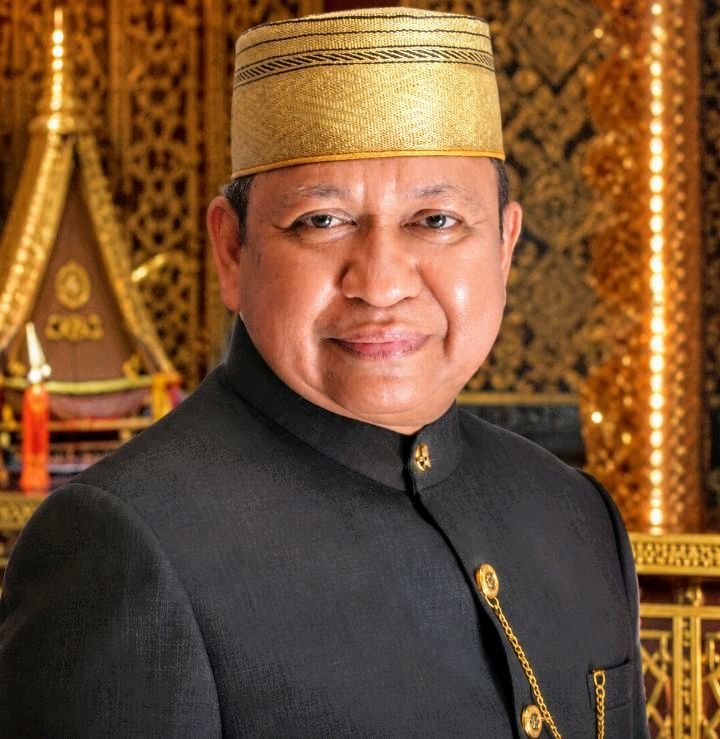
One of the critical views came from Dr. Mansur, S.H., M.M., a postgraduate lecturer at Universitas Yapis Papua (UNIYAP), who also serves as Chairman of the Papua Provincial Mosque Council and Chairman of the South Sulawesi Community Association in Papua.
In a telephone interview on Thursday morning (May 14, 2026), Dr. Mansur shared his views regarding the substance of the documentary, particularly concerning the national food estate development project in Merauke, South Papua.
Despite observing a voluntary fast, Dr. Mansur took time to answer various questions regarding the film’s moral message, development dynamics in Papua, and criticism of the implementation of National Strategic Projects (PSN) in eastern Indonesia.
According to Dr. Mansur, parts of the documentary contain facts that deserve the government’s attention, although some aspects still require objective and academic clarification.
“I see that some parts are accurate, while others indeed need to be clarified. But overall, the main issue is how development policies are being implemented without seriously considering the social, cultural, and environmental conditions of Papuan communities,” Dr. Mansur said.
Dr. Mansur specifically highlighted the government’s plan to develop two million hectares of rice fields in Merauke and Wanam Village, South Papua, as part of Indonesia’s national food security project.
He acknowledged that the government’s goal of establishing a national food estate is fundamentally positive, particularly in addressing Indonesia’s rice needs and strengthening national food security. However, he argued that the implementation of the program has not been fully supported by mature academic studies and an appropriate socio-cultural approach.
“I have lived in Papua for more than 40 years. During the New Order era, I worked in regional government in the socio-political sector, so I understand Papua’s social, cultural, and political issues. In my view, the objectives of this program are good, but its implementation needs to be reevaluated,” he stated.
He believes the government has been overly focused on production targets and economic growth while overlooking Papua’s ecological characteristics, which differ significantly from other regions in Indonesia.
Dr. Mansur pointed to Merauke’s geographical conditions, including high rainfall levels and extensive swamp and brackish water areas, which he considers serious challenges for large-scale rice cultivation.
“If rainfall is high from September to March, rice production may only be possible once a year. The question is whether there have been truly comprehensive environmental assessments and feasibility studies. Development enthusiasm should not end up damaging the environment,” he said.
Beyond environmental concerns, Dr. Mansur also argued that the project has not fully involved indigenous communities as the primary subjects of development.
According to him, Papuan communities maintain a way of life and culture that are deeply connected to forests and customary lands. Therefore, modern agricultural development approaches cannot simply be applied uniformly as they are in Java or other parts of Indonesia.
“Papuan people live with their forests. There is sago, hunting, and natural crops that sustain their lives. When customary lands are taken for major projects, the sustainability of the communities’ livelihoods must also be considered,” he explained.
He stressed that Papuan people are not opposed to development. However, they will react if they feel excluded or deceived by promises that do not match reality.
“Papuan people are not anti-development. But if government promises are unclear or inconsistent with reality, there will certainly be reactions. Traditional leaders in Papua do not want to be deceived,” he said.
According to Dr. Mansur, the government should prioritize cultural communication before implementing large-scale projects.“
In Papua, the approach must be cultural. Officials must speak directly with indigenous communities on their own land, sit together, share meals together, and then explain the purpose of development. That is the proper way,” he stated.
Dr. Mansur also criticized what he described as an overly capitalistic development model that lacks empowerment of local communities.He argued that development should position local communities as the main actors, rather than merely spectators on their own land.
“If the government comes with large investors who control the land while local people can only watch from outside the fence, that is not fair development,” he said.
He further warned that large-scale projects that ignore environmental concerns and indigenous rights could potentially lead to legal problems, including allegations of human rights violations and environmental destruction.
“If the government is not careful, it could face lawsuits over environmental issues and indigenous community rights,” he warned.
As a solution, Dr. Mansur urged the central government to conduct a comprehensive evaluation of the Merauke food estate project and open dialogue with indigenous communities, environmental organizations, academics, local governments, and Papuan community leaders.
He also encouraged the government to adopt an environmentally sustainable and labor-intensive approach to food security development in Papua, involving local residents directly.
“If the government wants to build two million hectares of rice fields, then create a modern concept that still protects forests and the environment. Do not simply clear land on a massive scale,” he said.
According to him, the government should instead empower local communities as the main producers of food, while the state focuses on guidance, distribution, and infrastructure support.
“The government only needs to facilitate its people. Involve local communities as the main actors. The government can later collect and distribute the harvests. That would be a program that truly sides with the people,” he explained.
At the end of his statement, Dr. Mansur invited students and younger generations to use the controversy surrounding the Pesta Babi documentary as a national reflection on how Indonesia’s development should be carried out professionally, humanely, and in accordance with the nation’s own cultural values.
“We all want this nation to progress and prosper. But development must not be carried out in ways that ignore the people and the environment. There must be competence, conscience, and logical thinking in policymaking,” he said.
He also expressed hope that criticism of government policies would not be viewed as hostility, but rather as constructive feedback for improving national development, especially in Papua.
“If the government becomes anti-criticism, it may become arrogant and self-righteous. In fact, criticism is important as a positive correction for the interests of the people,” the lecturer concluded.
Reporter: Fahmy Nurdin
Editor: Fahmy Nurdin